Milestones: -reads some words automatically -looks in books to find answers to questions -reads and rereads books independently -uses strategies to decode new words -begins spelling more conventionally and recognize their own mistakes -asks questions about what they read -chooses to read during free time -pauses at appropriate places in text -predicts what may happen next in a narrative -recognizes own mistakes while reading What you can do: -read books that are above your child’s reading level to your child -listen to your child read books at their reading level -ask children what their favorite part of a story is and why -ask more How and Why questions Books to Try:  Browne, A. (1998). Voices in the park. Italy: Dk Pub. This day tells the story of two families day at the park through different points of view. Questions to ask: Which home would you rather live in? Which child would you rather be? Parents can also have children write a favorite story from another characters point of view.  This humurous book follows a worm through his daily life. The diary format of this book encourages children to write themselves. Parents can ask: Before reading ask: What do you think a worm would write about in his diary? What do you think is the funniest part of the book? Why? Parents can help children write diary entries from another animals point of view.  Dahl, R. (1961). James & the Giant Peach. New York: Bantam Books. This classic is one of my favorite read alouds. Children will love hearing about James's adventure across the ocean. This book lends itself well to predictions and problem solving. Parents can ask: Who is your favorite character in the book? Why? How do you think James will get away from the sharks? After reading parents can enjoy the movie with their child and then discuss how it differs from the book. |
Jackers

Jackers
Sunday, September 18, 2011
Stages of Literacy a Guide for Parents: 7-8 years

Saturday, September 17, 2011
Stages of Literacy a Guide for Parents: 5-6 years
Milestones: -getting better at retelling story from picture book, retellings are more detailed and accurate -can name many letters and numbers -“writing” to communicate a message, may try to sound out words and write corresponding letters -know that a word is a combination of letters -knows letters relate to sounds -pick out rhyming words -beginning to build sight word vocabulary -tries to sound out new words -motivation to read independently What you can do: -practice identifying letters and sounds (play a matching game, sing a song, play with magnetic letters etc) -ask questions while reading (Who, What, Where, Why?) -point to words while you read -encourage them to make predictions about stories -read same stories, rhymes, songs again and again Books to try:  I recommend this book because it lends itself to conversations between children and their parents/ grandparents about their past. I don't think children hear enough stories from their elders about their lives. Both child and parent will enjoy this beautiful book. Parents can ask: The books talks about everything Grandpa is (gardener, father, soldier) have your child think of everything he or she is (artist, son, student etc.) do the same for yourself. Parents can also encourage child to come up with questions to ask their own grandparents about their lives then they could interview them! 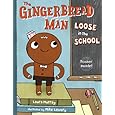 Murray, L. & Lowery, M. (2011). The gingerbread man loose in the school. New York: G. P. Putnam's An alternative spin on a classic story. Parents can help children compare and contrast the different versions. Parents can ask: How is this different than the other gingerbread man story? Which do you like best? Why? Parents can also ask children to summarize the events of the story. Children can write their own story about what it would be like to have a gingerbread man loose some where.  Mayer, M. (1987). There's an alligator under my bed. New York: Dial Books For Young Readers. One of my all time favorites from childhood. This book is great for sequencing and it's cliffhanger ending lends itself well to making predictions about what could happen. Parents can: Before reading the book have child predict what might happen .Ask children what you would do if there was an alligator under their bed. Have children create a story continuing the narrative. |
Stages of Literacy a Guide for Parents: 3-4 years
Milestones: -competent book handling -turns paper pages one at a time -listens to longer stories -can retell a familiar story -understands what text is -moves finger along text -writes their name -moving towards letter recognition -begins to play with words (rhyming etc) -counts syllables in words What you can do: -ask “What’s happening…?” and “What happened…?” -provide materials for drawing and writing. recognize any work as "writing" -let your child “read” the story to you -practice writing their name with your child Websites to check out: starfall - letter identification and reading practice Books to try: 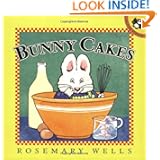 "Bunny Cakes" is a funny story about Max's quest to make a cake for his grandmother's. This book will encourage children to do some of their own writing just as Max does in the story. Parents can ask: Why do you think Max didn't get what he asked for? What is your favorite part of the story? Which cake do you like best? Why? Parents can make a connection with this book by creating recipes with their children and have their children "write" them. 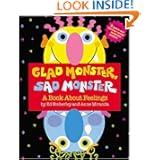 A colorful book about feelings complete with a monster mask for each feeling. Children can learn to express how they are feeling using this text. Parents can ask: What makes you feel sad? What makes you feel angry? Parents can have children practice making each facial expression that goes with the feelings. Parents can also have children draw pictures of what makes them feel different emotions. 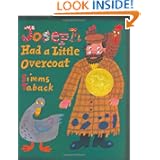 This repetitive text lends itself to repeated readings and allows children to "read" to themselves. Parents can ask: What do you think Joseph will make now? Have children complete the sentences (Joseph had a little over coat it got old and ______). Parents can also brainstorm with their children what they could do with their old and worn items. |
Resources for Stages of Literacy Posts
References
Haney, M., & Hill, J. (2004). Relationships between parent-teaching activities and emergent literacy in preschool children.. Early Childhood Development and Care, 174(3), 215-228.
Homepage - ReadWriteThink. (n.d.). Homepage - ReadWriteThink. Retrieved September 13, 2011, from http://www.readwritethink.org
Morrow, L. (2008). Literacy Development in the Early Years: Helping Children Read and Write + MyEducationLab. Boston, MA: Allyn & Bacon.
Reach Out and Read - Home. (n.d.). Reach Out and Read - Home. Retrieved September 13, 2011, from http://www.reachoutandread.org
Reading Comprehension & Language Arts Teaching Strategies for Kids | Reading Rockets. (n.d.). Reading Comprehension & Language Arts Teaching Strategies for Kids | Reading Rockets. Retrieved September 13, 2011, from http://www.readingrockets.org
Scholastic, Helping Children Around the World to Read and Learn | Scholastic.com. (n.d.). Scholastic, Helping Children Around the World to Read and Learn | Scholastic.com. Retrieved September 13, 2011, from http://scholastic.com
Starfall's Learn to Read with phonics. (n.d.). Starfall's Learn to Read with phonics. Retrieved September 13, 2011, from http://www.starfall.org
APA formatting by BibMe.org.
Wednesday, September 14, 2011
Stages of Literacy a Guide for Parents: 2-3 years
Milestones: -learns to handle paper pages -flips through pages to find favorite pictures -recites whole phrases -coordinates text with pictures -may recognize when adults says incorrect word in favorite story -reads favorite books to self -recognizes self in mirror -asks questions to gain information What you can do: -provide your child with opportunities to use crayons and other writing utensils. -use books in routines -read at bedtime -be willing to read favorite stories over and over and over! -ask questions Whats that…? -relate books to experiences Books to read: 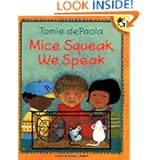 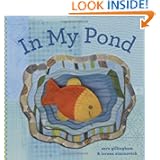 Gillingham, S., & Siminovich, L. (2009). In my pond. SanFrancisco: Chronicle Books, LLC. Gillingham, S., & Siminovich, L. (2009). In my pond. SanFrancisco: Chronicle Books, LLC. 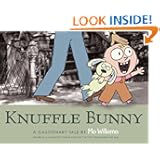 Willems, M. (2004). Knuffle Bunny: a cautionary tale. New York: Hyperion Books for Children. Willems, M. (2004). Knuffle Bunny: a cautionary tale. New York: Hyperion Books for Children. |
Stages of Literacy a Guide for Parents: 1-2 years
Milestones: -carries book -holds book with help -turns board book pages -book no longer goes in mouth right away -points at pictures with one finger -begins labeling pictures (may not be conventional words) -points to pictures when asked wheres…? -turns book right side up -gives book to adult to read -fills in word for familiar stories -“reads” to stuffed animals -attention span variable -let child control the book -ask questions Where’s the…?, What’s that…? -pause and let children complete sentences Some great books to try: Campbell, Rod. Dear zoo: a pop-up book. New York: Little Simon, 2005. Print. 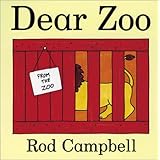 This book tells the story of a child writing to a zoo in search of the perfect pet. The repetitive text and engaging lift-the-flap format is great for young readers. Parents can ask: What do you think is in the box? Would you like that as a pet? Why do you think that pet wasn't right? What kind of pet would you like. Asking questions is an important part of reading to your child even if they can't answer you back yet!  Grover, Lorie Ann, and Debra Ziss. Bedtime kiss for little fish. New York: Cartwheel Books, 2009. Print. This board book is great for early literacy with it's simple rhyming scheme and predictablitly. Older toddlers will be able to finish the sentence on the page with repeated readings. Colorful pages will keep young children interested. Parents can ask: What is that? Where is the...? Have children finish the sentences with repeated readings. Walsh, Melanie. Do pigs have stripes?. Boston: Houghton Mifflin Co., 1996. Print 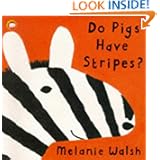 This book teaches simple concepts about animals through a series of questions. Allows parents to ask questions of their young children with the question built in. Parents can ask: Who has a big black wet nose? etc and can encourage child to look at picture to make a guess (even if they are too young for this you are modeling this skill and behavior). |
Stages of Literacy a Guide for Parents: 0-12 Months
Milestones: -plays with sounds -communicate non-verbally -reaches for book -puts book in mouth -sits in lap -turns pages with help -looks at pictures -prefers pictures of faces What you can do: -hold child comfortably -follow babies cues and stop reading when child exhibits wanted to stop -point to an name pictures -sing songs and talk to your baby -have toys with the alphabet around for the child to play with, name letters while you play with him Other Information: How to Read to a Squiggly Baby Other Things to Do With Your Baby Great books for this age group: 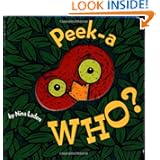 Laden, Nina. Peek-a-who?. San Francisco: Chronicle Books, 2000. This board book is great for babies because it is colorful, and brief with repetition and rhyme. Ask your child the questions that are presented in the book even though they may not be able to answer! They will love the rhyming and peek-a-boo window. 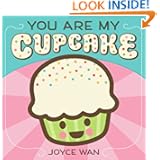 Wan, Joyce. You are my cupcake. New York: Cartwheel Books, 2011. Print. Wan, Joyce. You are my cupcake. New York: Cartwheel Books, 2011. Print.This sweet book has wonderfully bright colors that will catch any babies attention. There is also texture added to the pages to make the book more touchable to little hands and fingers.  Sickler, Jonas, and Sarah Josepha Buell Hale. Mary had a little lamb. New York: Workman Pub., 2010. Print. This indestructible book tells the story of "Mary had a Little Lamb" with no text. This book allows babies to handle and chew on the book without it causeing the book any damage. Check out other "Indestructibles". While looking at the books parents can point and name objects in the picture, older babies can start to point to these things themselves. |
Subscribe to:
Posts (Atom)