Milestones: -reads some words automatically -looks in books to find answers to questions -reads and rereads books independently -uses strategies to decode new words -begins spelling more conventionally and recognize their own mistakes -asks questions about what they read -chooses to read during free time -pauses at appropriate places in text -predicts what may happen next in a narrative -recognizes own mistakes while reading What you can do: -read books that are above your child’s reading level to your child -listen to your child read books at their reading level -ask children what their favorite part of a story is and why -ask more How and Why questions Books to Try:  Browne, A. (1998). Voices in the park. Italy: Dk Pub. This day tells the story of two families day at the park through different points of view. Questions to ask: Which home would you rather live in? Which child would you rather be? Parents can also have children write a favorite story from another characters point of view.  This humurous book follows a worm through his daily life. The diary format of this book encourages children to write themselves. Parents can ask: Before reading ask: What do you think a worm would write about in his diary? What do you think is the funniest part of the book? Why? Parents can help children write diary entries from another animals point of view.  Dahl, R. (1961). James & the Giant Peach. New York: Bantam Books. This classic is one of my favorite read alouds. Children will love hearing about James's adventure across the ocean. This book lends itself well to predictions and problem solving. Parents can ask: Who is your favorite character in the book? Why? How do you think James will get away from the sharks? After reading parents can enjoy the movie with their child and then discuss how it differs from the book. |
Jackers

Jackers
Sunday, September 18, 2011
Stages of Literacy a Guide for Parents: 7-8 years

Saturday, September 17, 2011
Stages of Literacy a Guide for Parents: 5-6 years
Milestones: -getting better at retelling story from picture book, retellings are more detailed and accurate -can name many letters and numbers -“writing” to communicate a message, may try to sound out words and write corresponding letters -know that a word is a combination of letters -knows letters relate to sounds -pick out rhyming words -beginning to build sight word vocabulary -tries to sound out new words -motivation to read independently What you can do: -practice identifying letters and sounds (play a matching game, sing a song, play with magnetic letters etc) -ask questions while reading (Who, What, Where, Why?) -point to words while you read -encourage them to make predictions about stories -read same stories, rhymes, songs again and again Books to try:  I recommend this book because it lends itself to conversations between children and their parents/ grandparents about their past. I don't think children hear enough stories from their elders about their lives. Both child and parent will enjoy this beautiful book. Parents can ask: The books talks about everything Grandpa is (gardener, father, soldier) have your child think of everything he or she is (artist, son, student etc.) do the same for yourself. Parents can also encourage child to come up with questions to ask their own grandparents about their lives then they could interview them! 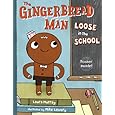 Murray, L. & Lowery, M. (2011). The gingerbread man loose in the school. New York: G. P. Putnam's An alternative spin on a classic story. Parents can help children compare and contrast the different versions. Parents can ask: How is this different than the other gingerbread man story? Which do you like best? Why? Parents can also ask children to summarize the events of the story. Children can write their own story about what it would be like to have a gingerbread man loose some where.  Mayer, M. (1987). There's an alligator under my bed. New York: Dial Books For Young Readers. One of my all time favorites from childhood. This book is great for sequencing and it's cliffhanger ending lends itself well to making predictions about what could happen. Parents can: Before reading the book have child predict what might happen .Ask children what you would do if there was an alligator under their bed. Have children create a story continuing the narrative. |
Stages of Literacy a Guide for Parents: 3-4 years
Milestones: -competent book handling -turns paper pages one at a time -listens to longer stories -can retell a familiar story -understands what text is -moves finger along text -writes their name -moving towards letter recognition -begins to play with words (rhyming etc) -counts syllables in words What you can do: -ask “What’s happening…?” and “What happened…?” -provide materials for drawing and writing. recognize any work as "writing" -let your child “read” the story to you -practice writing their name with your child Websites to check out: starfall - letter identification and reading practice Books to try: 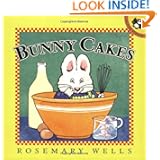 "Bunny Cakes" is a funny story about Max's quest to make a cake for his grandmother's. This book will encourage children to do some of their own writing just as Max does in the story. Parents can ask: Why do you think Max didn't get what he asked for? What is your favorite part of the story? Which cake do you like best? Why? Parents can make a connection with this book by creating recipes with their children and have their children "write" them. 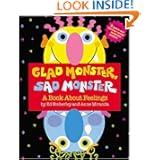 A colorful book about feelings complete with a monster mask for each feeling. Children can learn to express how they are feeling using this text. Parents can ask: What makes you feel sad? What makes you feel angry? Parents can have children practice making each facial expression that goes with the feelings. Parents can also have children draw pictures of what makes them feel different emotions. 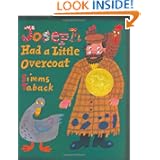 This repetitive text lends itself to repeated readings and allows children to "read" to themselves. Parents can ask: What do you think Joseph will make now? Have children complete the sentences (Joseph had a little over coat it got old and ______). Parents can also brainstorm with their children what they could do with their old and worn items. |
Resources for Stages of Literacy Posts
References
Haney, M., & Hill, J. (2004). Relationships between parent-teaching activities and emergent literacy in preschool children.. Early Childhood Development and Care, 174(3), 215-228.
Homepage - ReadWriteThink. (n.d.). Homepage - ReadWriteThink. Retrieved September 13, 2011, from http://www.readwritethink.org
Morrow, L. (2008). Literacy Development in the Early Years: Helping Children Read and Write + MyEducationLab. Boston, MA: Allyn & Bacon.
Reach Out and Read - Home. (n.d.). Reach Out and Read - Home. Retrieved September 13, 2011, from http://www.reachoutandread.org
Reading Comprehension & Language Arts Teaching Strategies for Kids | Reading Rockets. (n.d.). Reading Comprehension & Language Arts Teaching Strategies for Kids | Reading Rockets. Retrieved September 13, 2011, from http://www.readingrockets.org
Scholastic, Helping Children Around the World to Read and Learn | Scholastic.com. (n.d.). Scholastic, Helping Children Around the World to Read and Learn | Scholastic.com. Retrieved September 13, 2011, from http://scholastic.com
Starfall's Learn to Read with phonics. (n.d.). Starfall's Learn to Read with phonics. Retrieved September 13, 2011, from http://www.starfall.org
APA formatting by BibMe.org.
Wednesday, September 14, 2011
Stages of Literacy a Guide for Parents: 2-3 years
Milestones: -learns to handle paper pages -flips through pages to find favorite pictures -recites whole phrases -coordinates text with pictures -may recognize when adults says incorrect word in favorite story -reads favorite books to self -recognizes self in mirror -asks questions to gain information What you can do: -provide your child with opportunities to use crayons and other writing utensils. -use books in routines -read at bedtime -be willing to read favorite stories over and over and over! -ask questions Whats that…? -relate books to experiences Books to read: 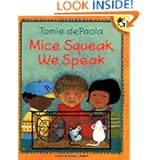 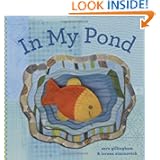 Gillingham, S., & Siminovich, L. (2009). In my pond. SanFrancisco: Chronicle Books, LLC. Gillingham, S., & Siminovich, L. (2009). In my pond. SanFrancisco: Chronicle Books, LLC. 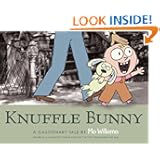 Willems, M. (2004). Knuffle Bunny: a cautionary tale. New York: Hyperion Books for Children. Willems, M. (2004). Knuffle Bunny: a cautionary tale. New York: Hyperion Books for Children. |
Stages of Literacy a Guide for Parents: 1-2 years
Milestones: -carries book -holds book with help -turns board book pages -book no longer goes in mouth right away -points at pictures with one finger -begins labeling pictures (may not be conventional words) -points to pictures when asked wheres…? -turns book right side up -gives book to adult to read -fills in word for familiar stories -“reads” to stuffed animals -attention span variable -let child control the book -ask questions Where’s the…?, What’s that…? -pause and let children complete sentences Some great books to try: Campbell, Rod. Dear zoo: a pop-up book. New York: Little Simon, 2005. Print. 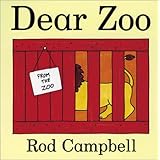 This book tells the story of a child writing to a zoo in search of the perfect pet. The repetitive text and engaging lift-the-flap format is great for young readers. Parents can ask: What do you think is in the box? Would you like that as a pet? Why do you think that pet wasn't right? What kind of pet would you like. Asking questions is an important part of reading to your child even if they can't answer you back yet!  Grover, Lorie Ann, and Debra Ziss. Bedtime kiss for little fish. New York: Cartwheel Books, 2009. Print. This board book is great for early literacy with it's simple rhyming scheme and predictablitly. Older toddlers will be able to finish the sentence on the page with repeated readings. Colorful pages will keep young children interested. Parents can ask: What is that? Where is the...? Have children finish the sentences with repeated readings. Walsh, Melanie. Do pigs have stripes?. Boston: Houghton Mifflin Co., 1996. Print 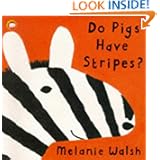 This book teaches simple concepts about animals through a series of questions. Allows parents to ask questions of their young children with the question built in. Parents can ask: Who has a big black wet nose? etc and can encourage child to look at picture to make a guess (even if they are too young for this you are modeling this skill and behavior). |
Stages of Literacy a Guide for Parents: 0-12 Months
Milestones: -plays with sounds -communicate non-verbally -reaches for book -puts book in mouth -sits in lap -turns pages with help -looks at pictures -prefers pictures of faces What you can do: -hold child comfortably -follow babies cues and stop reading when child exhibits wanted to stop -point to an name pictures -sing songs and talk to your baby -have toys with the alphabet around for the child to play with, name letters while you play with him Other Information: How to Read to a Squiggly Baby Other Things to Do With Your Baby Great books for this age group: 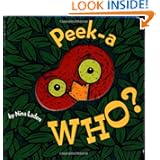 Laden, Nina. Peek-a-who?. San Francisco: Chronicle Books, 2000. This board book is great for babies because it is colorful, and brief with repetition and rhyme. Ask your child the questions that are presented in the book even though they may not be able to answer! They will love the rhyming and peek-a-boo window. 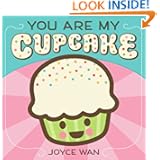 Wan, Joyce. You are my cupcake. New York: Cartwheel Books, 2011. Print. Wan, Joyce. You are my cupcake. New York: Cartwheel Books, 2011. Print.This sweet book has wonderfully bright colors that will catch any babies attention. There is also texture added to the pages to make the book more touchable to little hands and fingers.  Sickler, Jonas, and Sarah Josepha Buell Hale. Mary had a little lamb. New York: Workman Pub., 2010. Print. This indestructible book tells the story of "Mary had a Little Lamb" with no text. This book allows babies to handle and chew on the book without it causeing the book any damage. Check out other "Indestructibles". While looking at the books parents can point and name objects in the picture, older babies can start to point to these things themselves. |
Thursday, August 5, 2010
More Picture Books For Preschool and Kindergartners
A few other books I hav discovered along the way!
Young, E. (1992). Seven Blind Mice . New York: Putnam Juvenile.

Young uses bright colors against a black background to make this concept book about color and the days of the week come to life. The illustrations of the elephant show the mice in scale to the size of the elephant. This creates a visually stimulating image.
Questions: Why are the mice so surprised by what they find by the pond?
-Why did they think the elephants legs were?
-What will they think the elephants tail is?
Activities: Show the students zoomed in pictures of other objects and have them guess what the whole picture is.
Wong, J. S. (2002). Buzz. Ill. Chodos-Irvine, M. London: Voyager Books.

Wong, J. S. (2002). Buzz. London: Voyager Books.
Margaret uses printmaking techniques in these bleeding illustrations to create the early morning events in Buzz. The bold black letters of “Buzz” catch the eye as different objects make this familiar sound.
Questions: -What makes the buzz sound?
-What do you think is making the buzz sound in this picture?
-What other objects do you think go buzz?
Activity: Have children think about what other sounds they hear in the morning. Record them as a shared writing.
Hesse, K. (1999). Come On, Rain. Muth, J. J. New York: Scholastic Press.

This picture book captures the fantastic moment when it begins to suddenly rain on a really hot day. The yellow orange sky gives the feeling of a steamy day, when the sky turns dark the reader gets the feeling of relief along with the main character.
Questions: -How can you tell when it is about to rain?
-Do you like the rain? Do you ever like it went it rains?
-What does downpour mean?
Activity: Shared writing? I am glad it is raining because…
Jenkins, S. (1995). Biggest, Strongest, Fastest. Boston: Houghton Mifflin.

Steve Jenkins uses bold cut color paper collages to illustrate this books for young readers that is chock full of interesting facts about animals that are the “est”! These bleeding double page spreads are interesting to look at not only because of their bright colors but also because of their textured look. The back matter gives additional facts for teachers and parents to share with children.
Questions: What animal do you think is the biggest in the world?
What does strongest mean?
Is this book narrative or expository? (explain what these mean).
Activity: Find out with children is your class are tallest/shortest/fastest/quietist/strongest etc and make a class book.
Additional Titles
Jenkins, S. (2004). Actual Size . Boston: Houghton Mifflin.
Knight, B. T. (1997). From Cow to Ice Cream (Changes). New York: Children's Press.
R., C., Stoick, J., & Sams, I. (2000). Stranger in the Woods: A Photographic Fantasy. Friesens of Altona, Manitoba, Canada: Edco Publishing.
Morris, A. (1998). Shoes, Shoes, Shoes (Mulberry Books). New York: HarperTrophy.
Tarpley, N. A. (2001). I Love My Hair!. New York: Little, Brown Young Readers.
Young, E. (1992). Seven Blind Mice . New York: Putnam Juvenile.

Young uses bright colors against a black background to make this concept book about color and the days of the week come to life. The illustrations of the elephant show the mice in scale to the size of the elephant. This creates a visually stimulating image.
Questions: Why are the mice so surprised by what they find by the pond?
-Why did they think the elephants legs were?
-What will they think the elephants tail is?
Activities: Show the students zoomed in pictures of other objects and have them guess what the whole picture is.
Wong, J. S. (2002). Buzz. Ill. Chodos-Irvine, M. London: Voyager Books.

Wong, J. S. (2002). Buzz. London: Voyager Books.
Margaret uses printmaking techniques in these bleeding illustrations to create the early morning events in Buzz. The bold black letters of “Buzz” catch the eye as different objects make this familiar sound.
Questions: -What makes the buzz sound?
-What do you think is making the buzz sound in this picture?
-What other objects do you think go buzz?
Activity: Have children think about what other sounds they hear in the morning. Record them as a shared writing.
Hesse, K. (1999). Come On, Rain. Muth, J. J. New York: Scholastic Press.

This picture book captures the fantastic moment when it begins to suddenly rain on a really hot day. The yellow orange sky gives the feeling of a steamy day, when the sky turns dark the reader gets the feeling of relief along with the main character.
Questions: -How can you tell when it is about to rain?
-Do you like the rain? Do you ever like it went it rains?
-What does downpour mean?
Activity: Shared writing? I am glad it is raining because…
Jenkins, S. (1995). Biggest, Strongest, Fastest. Boston: Houghton Mifflin.

Steve Jenkins uses bold cut color paper collages to illustrate this books for young readers that is chock full of interesting facts about animals that are the “est”! These bleeding double page spreads are interesting to look at not only because of their bright colors but also because of their textured look. The back matter gives additional facts for teachers and parents to share with children.
Questions: What animal do you think is the biggest in the world?
What does strongest mean?
Is this book narrative or expository? (explain what these mean).
Activity: Find out with children is your class are tallest/shortest/fastest/quietist/strongest etc and make a class book.
Additional Titles
Jenkins, S. (2004). Actual Size . Boston: Houghton Mifflin.
Knight, B. T. (1997). From Cow to Ice Cream (Changes). New York: Children's Press.
R., C., Stoick, J., & Sams, I. (2000). Stranger in the Woods: A Photographic Fantasy. Friesens of Altona, Manitoba, Canada: Edco Publishing.
Morris, A. (1998). Shoes, Shoes, Shoes (Mulberry Books). New York: HarperTrophy.
Tarpley, N. A. (2001). I Love My Hair!. New York: Little, Brown Young Readers.
Beyond "Chicka Chicka Boom Boom"
Found: Great alphabet books for pre-readers! The following are some out of the box and classic alphabet books I have recently discovered
Alphabet Books
(2002). Museum ABC (1 ed.). New York: Little, Brown Young Readers.

In this alphabet book each letter is accompanied by several painting from the Metropolitan museum of art. This can expose children do are they may not have been aware of before. The back matter is a great research to teachers who like to relay added facts to their students.
Questions: Why do you think they used this picture for the letter ___?
Which picture of the apples do you like best? Why?
What is a museum? What have you seen museums?
Activity: In the dramatic play center create a class museum of student artwork. Talk about what people do at museums and even watch a few videos. Have children role play visiting a museaum.
Baker, K. (2010). LMNO Peas. New York: Beach Lane Books.

Kieth Baker draws you in with large textured bright letters and guides your eyes to the stars of the book, the peas, with the bold black print of the text. Each pea is different and unique (the theme of the book) and children will want to go back for a second and third look to see what they can find.
Questions: What is your favorite vegetable? Do you like peas?
Estimate how many peas you think are on this page?
What do you think of peas now?
What is your favorite page? Why?
What on this page starts with the letter ____.
Activity: Have each child decorate an enlarged picture of a pea with what they want to be when they grow up.
Base, G. (1996). Animalia (Picture Puffins). New York City: Puffin.

This complex animal alphabet books is a veritable turkey dinner for the eyes. Each picture features a main focus but if you let your eyes wander from the incredibly detailed and lifelike animals you will find other little treasures. Children will have fun looking for all the objects starting with the pages sound.
Questions: Name all the object you see in this picture that start with the sound of ___?
-Flip to a random page in the book and cover the letter. Have the children guess the letter by looking at the picture.
-Raise your hand when you hear the sound of ___.
Activity: Have the children find all the items in the room that start with ___.
Bayer, J. E. (1992). A, My Name Is Alice. Ill. Kellogg, S. New York City: Puffin.

This well known jump rope song is brought to life by Steven Kellogg with his use of ink and pastel line with watercolor washes. These personified animals draw the reader in with silly faces and kind eyes.
Questions: Have children predict the ending of the sentences by looking at the page.
-What else could Alice sell?
-What could you sell if you were in the rhyme?
Activity: Shared writing: As a class come up with a list of things each child could sell if they were in the picture book.
Bolster, J., & Pallotta, R. (2006). The Construction Alphabet Book . Ill Bolster, R. Watertown, MA: Charlesbridge Publishing.

In this picture book the reader learns about the alphabet but also about different
construction equipment. The watercolor pictures are very lifelike with the shadow particularly well done.
Questions: What kinds of heavy equipment/trucks do you already know about?
-What is your favorite truck/equipment in the book, why?
-What do you think this truck’s job is?
Activity: Put several copies of this book in the construction center. Have the children build the letters out of wooden blocks. Have several toy trucks in the center for the children to explore as well. Scaffold the children and discuss what they are building.
Catalanotto, P. (2002). Matthew A. B. C. New York: Aladdin Paperbacks.

In this unique alphabet book Catalanotto uses water color to create and unusual classroom where all the students are named Matthew. Children won’t be able to keep themselves from laughing when they see all the interesting ways their teacher tells them apart. While the letters are used here they are not the main focus.
Questions: Cover up the last word on the page and have them guess. (Matthew K. is usually fond of ______)
Have children brainstorm what the word perplexed/queasy/fond mean in
context.
Why do you think Matthew J. is sleeping on the J page?
Activity:Brainstorm and have students come up with a page for their own name.
Example: Alycia is always to antsy.
Elting, M., & Folsom, M. (2005). Q Is for Duck: An Alphabet Guessing Game. Ill. Kent, J. New York: Clarion Books.

Children will make new associations with the letters/sounds in this alphabet guessing book. One page says, “B is for Dog Why? Because dogs eat bones” these simple riddles will have kindergarten and preschool children picking up this book again and again. The illustrations are done is a warm color scheme of oranges, reds, and yellows. The colors are not too over stimulating, perhaps to put the focus on the riddles which are already getting the readers brains warmed up!
Questions: -What letter makes the /b/ sound?
- Is this right B is for Dog?
- After the children get the hang of it have them guess the rest of the riddles.
Activity: Brainstorm with children and make up class riddles. Post them on a hall bulletin board and challenge other classes to solve them.
Ernst, L. C. (2004). The Turn-Around, Upside-Down Alphabet Book. New York, NY: Simon & Schuster.

Ernst created this alphabet with cut paper which pops against the dark black background. The letters in this alphabet book can be turned around and upside down to create different objects. The test circles the book allowing the reader to turn the book to see these hidden picture.
Questions: -What do you see in this picture?
-What do you see now?
-Before turning the page have the children guess at what the next letter will turn into.
Activities: Have children add drawings to letters to turn them into something different. Create a class book.
Gag, W. (1933). The Abc Bunny . Minneapolis: University of Minnesota Press.

In this classic alphabet book Gag uses artfully shaded animals going about their days to depict the letters and sounds of the alphabet. The rhyming text will be pleasing to the ears of preschool and kindergarten children.
Questions: Cloze activities/Have the children finish the rhymes on the pages.
Which two words on these pages rhyme?
On M page ask: How do you think the rabbit got through the fence?
Activity: Rewrite in book form and have children create their own illustrations for the book in the style of the author.
Gerstein, M. (2001). The Absolutely Awful Alphabet. London: Voyager Books.

At first glance each of the letters in this alphabet book they just look like letters. Take another glance and you will see silly and monster like creatures. These letters done in oil paints and pen and ink will have the reader both laughing and scratching their head. The text offers wonderfully sophisticated vocabulary that will loan itself to teachable moments.
Questions: -What do you think pulverize/quizzical/vile means?
-As you turn the page have children make the sound the letters stand for before reading the page.
Activities: -Children can color in letters making them into different creature. Then they can vocalize which letter they have and what their creature is.
Johnson, S. T. (1999). Alphabet City. New York City: Puffin. (Original work published 1995)

Do you see the letters all around you? They are there take another look! In this book Johnson makes the reader take a second look at the world around them by presenting us with everyday objects that are the shape of different letters. Children will be asked to generalize the alphabetic knowledge to not just the printed word.
Questions: Do you see any letter in this room?
Do you see any letters that are not on paper?
What letter do you see on this page? What sound does that letter stand for?
Activities: Have children look around the room and find object that look like letters. Encourage children to build letters with blocks, counters, scrap paper etc.
Lionni, L. (2004). The Alphabet Tree. New York: Knopf Books For Young Readers.

Oh no! The letters have all been tossed up by a windstorm! In Lionni’s signature simplistic style he tells the story of a bug that teaches the letters to make words and then sentences. Instead of just naming objects or animals for each of the letters this alphabet book tells a story.
Questions: Why do we have letters?
When you put letters together what do you make? When you put words together what do they make?
What do you think will happen to the letters now that they are all mixed up?
Activity: Make a class letter tree. Have the children take turns putting the letters back in order and making simple words. Have word card available for children who are at different skill levels.
Micklethwait, L. (1996). I Spy: An Alphabet in Art (I Spy Series). New York: HarperTrophy.

In this alphabet book famous paintings accompany each letter allowing young readers exposure to artwork for perhaps the first time.
Questions: -Have children guess what the object that starts with each letter is.
-What is your favorite painting why?
-How does this painting make you feel?
Activities: Play I spy with letters with the students in small groups.
Pelletier, D. (1996). The Graphic Alphabet (Caldecott Honor Book). New York: Scholastic.

“The Graphic Alphabet” lives up to its name, all of the art was done and reproduced digitally. Although the letters have been manipulated in complex ways the ideas are concrete. Children will have fun seeing how Pelletier alters the letters to create pictures.
Questions: -Flip to a random page and have the children say what letter is pictured. Have the students try to
figure out what is pictured.
-What do you think and avalanche is? Discuss this vocabulary and how it is pictured in the illustration.
Activities: Compare and contrast this book with “Alphabet City”. Look at the letter “B” in one and compare it to the other. Discuss as a class how they are different and how they are the same.
Shannon, G. (1999). Tomorrow's Alphabet (Mulberry Books). Ill. Crews, D. New York: HarperTrophy.

Large colorful images that take up most of the page accompany the brain stretching riddles. How can A be for seed? How can H be for Yarn? Open this interesting alphabet concept books and find out. Similar to “Q is for Duck” this book will have readers looking at the alphabet in a different way.
Questions: -Why do you think this is called tomorrow’s alphabet? -Ask again after reading
-Have children guess the answers to the riddle. Be sure to cover up the picture as the answer is on the same page.
-Compare this book to “Q is for Duck”. How are they the same? How are they different?
Answer: Create some of these riddles as a class!
Smith, R. (2008). An A to Z Walk In the Park (Animal Alphabet Book) (1st ed.). Calumet: Clarence-Henry Books.

This alphabet book features 200 animals both easily recognizable and rare! At the alphabet zoo the animals aren’t organized by species but by the first letter of their name. Although the text is somewhat contrived using this book lends itself to the discovery of new animals.
Questions: -Which animals do you know the name of in this picture?
-Have children predict what animals will be pictured next.
Activity: As a class research some of the unknown animals online. Learn about them through websites, video and other picture books.
APA formatting by BibMe.org.
Pictures from amazon.com
Alphabet Books
(2002). Museum ABC (1 ed.). New York: Little, Brown Young Readers.

In this alphabet book each letter is accompanied by several painting from the Metropolitan museum of art. This can expose children do are they may not have been aware of before. The back matter is a great research to teachers who like to relay added facts to their students.
Questions: Why do you think they used this picture for the letter ___?
Which picture of the apples do you like best? Why?
What is a museum? What have you seen museums?
Activity: In the dramatic play center create a class museum of student artwork. Talk about what people do at museums and even watch a few videos. Have children role play visiting a museaum.
Baker, K. (2010). LMNO Peas. New York: Beach Lane Books.

Kieth Baker draws you in with large textured bright letters and guides your eyes to the stars of the book, the peas, with the bold black print of the text. Each pea is different and unique (the theme of the book) and children will want to go back for a second and third look to see what they can find.
Questions: What is your favorite vegetable? Do you like peas?
Estimate how many peas you think are on this page?
What do you think of peas now?
What is your favorite page? Why?
What on this page starts with the letter ____.
Activity: Have each child decorate an enlarged picture of a pea with what they want to be when they grow up.
Base, G. (1996). Animalia (Picture Puffins). New York City: Puffin.

This complex animal alphabet books is a veritable turkey dinner for the eyes. Each picture features a main focus but if you let your eyes wander from the incredibly detailed and lifelike animals you will find other little treasures. Children will have fun looking for all the objects starting with the pages sound.
Questions: Name all the object you see in this picture that start with the sound of ___?
-Flip to a random page in the book and cover the letter. Have the children guess the letter by looking at the picture.
-Raise your hand when you hear the sound of ___.
Activity: Have the children find all the items in the room that start with ___.
Bayer, J. E. (1992). A, My Name Is Alice. Ill. Kellogg, S. New York City: Puffin.

This well known jump rope song is brought to life by Steven Kellogg with his use of ink and pastel line with watercolor washes. These personified animals draw the reader in with silly faces and kind eyes.
Questions: Have children predict the ending of the sentences by looking at the page.
-What else could Alice sell?
-What could you sell if you were in the rhyme?
Activity: Shared writing: As a class come up with a list of things each child could sell if they were in the picture book.
Bolster, J., & Pallotta, R. (2006). The Construction Alphabet Book . Ill Bolster, R. Watertown, MA: Charlesbridge Publishing.
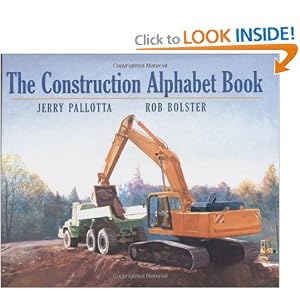
In this picture book the reader learns about the alphabet but also about different
construction equipment. The watercolor pictures are very lifelike with the shadow particularly well done.
Questions: What kinds of heavy equipment/trucks do you already know about?
-What is your favorite truck/equipment in the book, why?
-What do you think this truck’s job is?
Activity: Put several copies of this book in the construction center. Have the children build the letters out of wooden blocks. Have several toy trucks in the center for the children to explore as well. Scaffold the children and discuss what they are building.
Catalanotto, P. (2002). Matthew A. B. C. New York: Aladdin Paperbacks.

In this unique alphabet book Catalanotto uses water color to create and unusual classroom where all the students are named Matthew. Children won’t be able to keep themselves from laughing when they see all the interesting ways their teacher tells them apart. While the letters are used here they are not the main focus.
Questions: Cover up the last word on the page and have them guess. (Matthew K. is usually fond of ______)
Have children brainstorm what the word perplexed/queasy/fond mean in
context.
Why do you think Matthew J. is sleeping on the J page?
Activity:Brainstorm and have students come up with a page for their own name.
Example: Alycia is always to antsy.
Elting, M., & Folsom, M. (2005). Q Is for Duck: An Alphabet Guessing Game. Ill. Kent, J. New York: Clarion Books.

Children will make new associations with the letters/sounds in this alphabet guessing book. One page says, “B is for Dog Why? Because dogs eat bones” these simple riddles will have kindergarten and preschool children picking up this book again and again. The illustrations are done is a warm color scheme of oranges, reds, and yellows. The colors are not too over stimulating, perhaps to put the focus on the riddles which are already getting the readers brains warmed up!
Questions: -What letter makes the /b/ sound?
- Is this right B is for Dog?
- After the children get the hang of it have them guess the rest of the riddles.
Activity: Brainstorm with children and make up class riddles. Post them on a hall bulletin board and challenge other classes to solve them.
Ernst, L. C. (2004). The Turn-Around, Upside-Down Alphabet Book. New York, NY: Simon & Schuster.
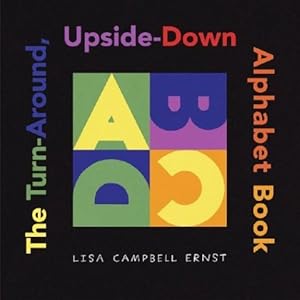
Ernst created this alphabet with cut paper which pops against the dark black background. The letters in this alphabet book can be turned around and upside down to create different objects. The test circles the book allowing the reader to turn the book to see these hidden picture.
Questions: -What do you see in this picture?
-What do you see now?
-Before turning the page have the children guess at what the next letter will turn into.
Activities: Have children add drawings to letters to turn them into something different. Create a class book.
Gag, W. (1933). The Abc Bunny . Minneapolis: University of Minnesota Press.
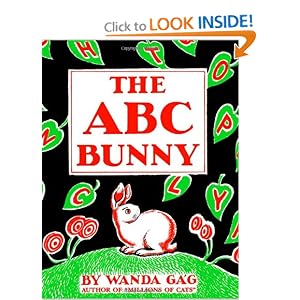
In this classic alphabet book Gag uses artfully shaded animals going about their days to depict the letters and sounds of the alphabet. The rhyming text will be pleasing to the ears of preschool and kindergarten children.
Questions: Cloze activities/Have the children finish the rhymes on the pages.
Which two words on these pages rhyme?
On M page ask: How do you think the rabbit got through the fence?
Activity: Rewrite in book form and have children create their own illustrations for the book in the style of the author.
Gerstein, M. (2001). The Absolutely Awful Alphabet. London: Voyager Books.
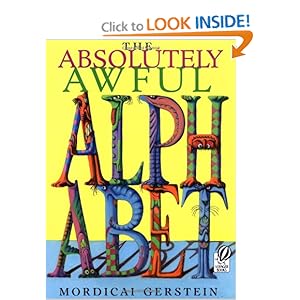
At first glance each of the letters in this alphabet book they just look like letters. Take another glance and you will see silly and monster like creatures. These letters done in oil paints and pen and ink will have the reader both laughing and scratching their head. The text offers wonderfully sophisticated vocabulary that will loan itself to teachable moments.
Questions: -What do you think pulverize/quizzical/vile means?
-As you turn the page have children make the sound the letters stand for before reading the page.
Activities: -Children can color in letters making them into different creature. Then they can vocalize which letter they have and what their creature is.
Johnson, S. T. (1999). Alphabet City. New York City: Puffin. (Original work published 1995)

Do you see the letters all around you? They are there take another look! In this book Johnson makes the reader take a second look at the world around them by presenting us with everyday objects that are the shape of different letters. Children will be asked to generalize the alphabetic knowledge to not just the printed word.
Questions: Do you see any letter in this room?
Do you see any letters that are not on paper?
What letter do you see on this page? What sound does that letter stand for?
Activities: Have children look around the room and find object that look like letters. Encourage children to build letters with blocks, counters, scrap paper etc.
Lionni, L. (2004). The Alphabet Tree. New York: Knopf Books For Young Readers.

Oh no! The letters have all been tossed up by a windstorm! In Lionni’s signature simplistic style he tells the story of a bug that teaches the letters to make words and then sentences. Instead of just naming objects or animals for each of the letters this alphabet book tells a story.
Questions: Why do we have letters?
When you put letters together what do you make? When you put words together what do they make?
What do you think will happen to the letters now that they are all mixed up?
Activity: Make a class letter tree. Have the children take turns putting the letters back in order and making simple words. Have word card available for children who are at different skill levels.
Micklethwait, L. (1996). I Spy: An Alphabet in Art (I Spy Series). New York: HarperTrophy.

In this alphabet book famous paintings accompany each letter allowing young readers exposure to artwork for perhaps the first time.
Questions: -Have children guess what the object that starts with each letter is.
-What is your favorite painting why?
-How does this painting make you feel?
Activities: Play I spy with letters with the students in small groups.
Pelletier, D. (1996). The Graphic Alphabet (Caldecott Honor Book). New York: Scholastic.

“The Graphic Alphabet” lives up to its name, all of the art was done and reproduced digitally. Although the letters have been manipulated in complex ways the ideas are concrete. Children will have fun seeing how Pelletier alters the letters to create pictures.
Questions: -Flip to a random page and have the children say what letter is pictured. Have the students try to
figure out what is pictured.
-What do you think and avalanche is? Discuss this vocabulary and how it is pictured in the illustration.
Activities: Compare and contrast this book with “Alphabet City”. Look at the letter “B” in one and compare it to the other. Discuss as a class how they are different and how they are the same.
Shannon, G. (1999). Tomorrow's Alphabet (Mulberry Books). Ill. Crews, D. New York: HarperTrophy.
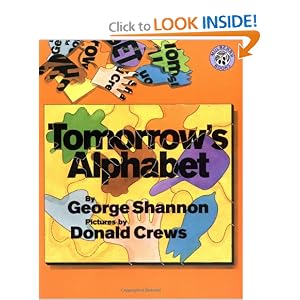
Large colorful images that take up most of the page accompany the brain stretching riddles. How can A be for seed? How can H be for Yarn? Open this interesting alphabet concept books and find out. Similar to “Q is for Duck” this book will have readers looking at the alphabet in a different way.
Questions: -Why do you think this is called tomorrow’s alphabet? -Ask again after reading
-Have children guess the answers to the riddle. Be sure to cover up the picture as the answer is on the same page.
-Compare this book to “Q is for Duck”. How are they the same? How are they different?
Answer: Create some of these riddles as a class!
Smith, R. (2008). An A to Z Walk In the Park (Animal Alphabet Book) (1st ed.). Calumet: Clarence-Henry Books.

This alphabet book features 200 animals both easily recognizable and rare! At the alphabet zoo the animals aren’t organized by species but by the first letter of their name. Although the text is somewhat contrived using this book lends itself to the discovery of new animals.
Questions: -Which animals do you know the name of in this picture?
-Have children predict what animals will be pictured next.
Activity: As a class research some of the unknown animals online. Learn about them through websites, video and other picture books.
APA formatting by BibMe.org.
Pictures from amazon.com
Wednesday, August 4, 2010
Picture Books Through the Decades
How have picture books changed through the Decades? Read below to find out!
Part 1
I chose to look at and analyze picture books across six decades, particularly Caldecott Winners or Honors books. By doing this I can learn more about what to expect when opening up books from different decades and enrich my read alouds by understanding how the illustrations and stories have changed. I have found that children love to know about how pictures are made and also about the authors and illustrators. The more I know the more I can share with student thus improving their ability to make connections, retell the story, etc.
1.1 , 1.2 , 1.4 Students communicate with others to create interpretations of written, oral and visual texts
Answer literal and easy inferential questions about texts read aloud.
1. Retell information from a story, using proper sequence.
2. Identify the setting, theme, conflict, and important events of the plot in a story.
Make text-to-self connections.
3. Identify the specific purposes of a text, e.g., to find information, to enjoy a story, to receive a message.
4. Express opinions about texts and the reasons why, e.g., I liked …, I did not like …
Part 2
1950s

Milhous, K. (1950). The egg tree story and pictures. New York: New York: Charles Scribner's Sons.
The end of World War II gave way to an increased interest in children’s librarys and picture books. During this time many new authors and illustrators began to create children’s books (Matulka, D., 2008) “The Egg Tree” was one award winning book that came out of the 1950s. In this Caldecott winning story about a Dutch family celebrating Easter Milhous uses muted colors to illustrate the book. Well muted colors by today’s standards, by the standards of the 1950s the colors in Milhous’ book were considered bright. Printing in color was very expensive in the fifties. Throughout most of Milhous’ book the colors are red and grey. Only in a few pictures where the eggs are featured are more varied colors used. This is a wonderful design choice that really makes the eggs pop out as the central focus of the story. Also of note is the plot of the story that is about a normal family celebrating together rather than the fairy tales that were scene in many children’s books preceding the 1950s. This story can still be enjoyed by the children of today.
1960s

Keats, E. J. (1962). The Snowy Day. New York: New York Viking Press .
In the 1960s the book format that we are familiar today took off because of this many artist experimented with different mediums and techniques (Matluka, D., 2008). One of the most recognizable books from the 1960s is the 1963 Caldecott winning “The Snowy Day” by Ezra Jack Keats. This book also marks the first African American character pictured in a story book. Keats experimented with medium here by blending gouache with collage. This method was different from the woodcuttings and other methods from the past. In “The Snowy Day” Keats uses bright colors and block like shapes to depict a child’s day in the snow. Many of the backgrounds in the illustrations are bright unconventional colors such and hot pink and orange. These illustrations are also unique because they lack facial detail without taking away from the emotional feel of the book. In looking at many other books from the sixties the medium and method used here seems very unique for its time.
1970s

Hogrogian, N. (1974). One Fine Day. New York: Aladdin.
Hogrogian uses bleeding images of water color to illustrate a Fox’s quest to retrieve his tale in this 1975 Caldecott winning picture book. This award winning story is timeless and still relevant today. Hogrogian shows the sadness that the fox feels by painting him with a turned down head and partially closed eyes. As he looks up at the old women with a pleading gaze the reader truly feels sympathy for his predicament. You can’t help but wish she would give it back right then and there. Although the illustrations are simple they have the ability to convey the emotions behind the story quite well. Hogrogian marks the passage of time in the foxes “One Fine Day” by including a bright yellow sun which moves across the page and begins to set as the reader turns the pages. This picture book has withstood the test of time and is still being sold today.
1980s

Yorinks, A., Egielski, R. (Illus)(1989). Hey, Al. New York: Farrar, Straus And Giroux (Byr).
In the 1980’s authors and illustrators continued to explore the possibilities of picture books. There was an increase in social consciousness which was present in picture books as well as an increase in multicultural images in the later part of the decade (Matluka, D., 2008). During this time Richard Egielski illustrated and won a Caldecott for “Hey Al” written by Arthur Yorinks. Richard Egielski was known for his quirky and original style. In “Hey Al” Egielski use this original style to tell a story of a man named Al who is bored with his life but in the end learns to appreciate all that he has.
The browns and tans of Al’s apartment gives it the mundane feeling that Al is experiencing and the framed nature of the illustrations make it looks small and cramped almost like a stage set. When Al leaves his apartment the scene opens up to a double page spread just like Al’s world is opening up and changing. The colors also become more diverse and vibrant. In the end the image of Al returning to his small room is truly heartbreaking with the only pop of color the dog’s dish. Happily, in the end the room is brightened with a pop of color when everything is resolved. This is also evident in the bright yellow end pages that differ from the front end pages that are beige.
1990s

Bunting, E., & Diaz, D. (1994). Smoky Night. New York: Harcourt Children's Books.
During the 1990s technology was developed that allowed children’s book illustrators to use new techniques to create their artwork. The lithographic processes were improved which allowed easier reproduction of complicated artwork. During the 1990s the first picture book using a digital medium was produced (Matluka, D., 2008). In the 1995 Caldecott winning Smoky Night (written by Eve Bunting) is an example of a book that could not have been done even a decade earlier due to both its content and technique. Diaz uses a combination of paint and collage to tell the story of a boy and his mother during the Los Angeles riots. When the character of Mama is explaining the riot the background to the text features red crumpled paper bringing about a feeling of danger. When the market is being looted the background is a collage of cereal and other foods. The people themselves are all the same mixture of pinks, purple, blue and oranges even though the text tells us they come from different cultures. This is perhaps to represent how we are all similar and need to work together to get through challenging times.
2000s and beyond!

-Irvine, M. (2003). Ella Sarah Gets Dressed. New York: Harcourt Children's Books.
In the first decade of the 21st century technology just keeps getting better and more sophisticated. The sky is the limit! Picture books are now being produced digitally. An artist can paint and create the old fashioned way and then take a picture/scan of their work to then be reproduced! This opens up a world of possibilities. Now artists can use any medium they like to create their illustrations, photographs, clay, stain glass or they don’t have to use any tangible medium at all. Some illustrators are now creating illustrations digitally. Digital illustrations can be made to look like most mediums, even paint! Artists are also working on tablets that allow what they draw on the tablet to be seen on the computer screen. The possibilities are truly endless.
“Ella Sara Gets Dressed” a 2004 Caldecott Honor book Irvine uses printmaking techniques on rives paper to create the familiar story of little girl who wants to dress herself. The stage is set with the brilliant orange and pink polka dot end pages. Irvine’s use of simple geometric shapes as facial features show how Ella is feeling when her mother tells her what to wear The bright colors and geometric design seem to represent the main character’s outrageous wardrobe choices throughout. In the end Ella’s choices do not disappoint as her friends join her in the fun.
Over the past six decades picture books have changed immensely. They have gone from a simple format to a genuine art form. In the past illustrators were held back because of the available printing techniques, now that challenge no longer exists. Like Ella illustrators have a closet of possibilities in front of them and all they have to do is reach in and get inspired.
Bunting, E., & Diaz, D. (1994). Smoky Night. New York: Harcourt Children's Books.
Chodos-Irvine, M. (2003). Ella Sarah Gets Dressed. New York: Harcourt Children's Books.
Keats, E. J. (1962). The Snowy Day. New York: New York Viking Press .
Hogrogian, N. (1974). One Fine Day. New York: Aladdin.
Matulka, D. I. (2008). A Picture Book Primer: Understanding and Using Picture Books. Englewood, Colorado: Libraries Unlimited.
Milhous, K. (1950). The egg tree. New York: New York: Charles Scribner's Sons.
Wiesner, D. (2001). The Three Pigs. New York: Clarion Books.
Yorinks, A. (1989). Hey, Al. New York: Farrar, Straus And Giroux (Byr).
Online resources:
http://www.ezra-jack-keats.org/index.php?option=com_content&view=article&id=51&Itemid=62
Books in Print Online Database
Contemporary Authors Online, Gale, 2009.
Part 1
I chose to look at and analyze picture books across six decades, particularly Caldecott Winners or Honors books. By doing this I can learn more about what to expect when opening up books from different decades and enrich my read alouds by understanding how the illustrations and stories have changed. I have found that children love to know about how pictures are made and also about the authors and illustrators. The more I know the more I can share with student thus improving their ability to make connections, retell the story, etc.
1.1 , 1.2 , 1.4 Students communicate with others to create interpretations of written, oral and visual texts
Answer literal and easy inferential questions about texts read aloud.
1. Retell information from a story, using proper sequence.
2. Identify the setting, theme, conflict, and important events of the plot in a story.
Make text-to-self connections.
3. Identify the specific purposes of a text, e.g., to find information, to enjoy a story, to receive a message.
4. Express opinions about texts and the reasons why, e.g., I liked …, I did not like …
Part 2
1950s

Milhous, K. (1950). The egg tree story and pictures. New York: New York: Charles Scribner's Sons.
The end of World War II gave way to an increased interest in children’s librarys and picture books. During this time many new authors and illustrators began to create children’s books (Matulka, D., 2008) “The Egg Tree” was one award winning book that came out of the 1950s. In this Caldecott winning story about a Dutch family celebrating Easter Milhous uses muted colors to illustrate the book. Well muted colors by today’s standards, by the standards of the 1950s the colors in Milhous’ book were considered bright. Printing in color was very expensive in the fifties. Throughout most of Milhous’ book the colors are red and grey. Only in a few pictures where the eggs are featured are more varied colors used. This is a wonderful design choice that really makes the eggs pop out as the central focus of the story. Also of note is the plot of the story that is about a normal family celebrating together rather than the fairy tales that were scene in many children’s books preceding the 1950s. This story can still be enjoyed by the children of today.
1960s

Keats, E. J. (1962). The Snowy Day. New York: New York Viking Press .
In the 1960s the book format that we are familiar today took off because of this many artist experimented with different mediums and techniques (Matluka, D., 2008). One of the most recognizable books from the 1960s is the 1963 Caldecott winning “The Snowy Day” by Ezra Jack Keats. This book also marks the first African American character pictured in a story book. Keats experimented with medium here by blending gouache with collage. This method was different from the woodcuttings and other methods from the past. In “The Snowy Day” Keats uses bright colors and block like shapes to depict a child’s day in the snow. Many of the backgrounds in the illustrations are bright unconventional colors such and hot pink and orange. These illustrations are also unique because they lack facial detail without taking away from the emotional feel of the book. In looking at many other books from the sixties the medium and method used here seems very unique for its time.
1970s

Hogrogian, N. (1974). One Fine Day. New York: Aladdin.
Hogrogian uses bleeding images of water color to illustrate a Fox’s quest to retrieve his tale in this 1975 Caldecott winning picture book. This award winning story is timeless and still relevant today. Hogrogian shows the sadness that the fox feels by painting him with a turned down head and partially closed eyes. As he looks up at the old women with a pleading gaze the reader truly feels sympathy for his predicament. You can’t help but wish she would give it back right then and there. Although the illustrations are simple they have the ability to convey the emotions behind the story quite well. Hogrogian marks the passage of time in the foxes “One Fine Day” by including a bright yellow sun which moves across the page and begins to set as the reader turns the pages. This picture book has withstood the test of time and is still being sold today.
1980s

Yorinks, A., Egielski, R. (Illus)(1989). Hey, Al. New York: Farrar, Straus And Giroux (Byr).
In the 1980’s authors and illustrators continued to explore the possibilities of picture books. There was an increase in social consciousness which was present in picture books as well as an increase in multicultural images in the later part of the decade (Matluka, D., 2008). During this time Richard Egielski illustrated and won a Caldecott for “Hey Al” written by Arthur Yorinks. Richard Egielski was known for his quirky and original style. In “Hey Al” Egielski use this original style to tell a story of a man named Al who is bored with his life but in the end learns to appreciate all that he has.
The browns and tans of Al’s apartment gives it the mundane feeling that Al is experiencing and the framed nature of the illustrations make it looks small and cramped almost like a stage set. When Al leaves his apartment the scene opens up to a double page spread just like Al’s world is opening up and changing. The colors also become more diverse and vibrant. In the end the image of Al returning to his small room is truly heartbreaking with the only pop of color the dog’s dish. Happily, in the end the room is brightened with a pop of color when everything is resolved. This is also evident in the bright yellow end pages that differ from the front end pages that are beige.
1990s
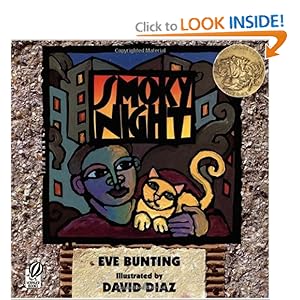
Bunting, E., & Diaz, D. (1994). Smoky Night. New York: Harcourt Children's Books.
During the 1990s technology was developed that allowed children’s book illustrators to use new techniques to create their artwork. The lithographic processes were improved which allowed easier reproduction of complicated artwork. During the 1990s the first picture book using a digital medium was produced (Matluka, D., 2008). In the 1995 Caldecott winning Smoky Night (written by Eve Bunting) is an example of a book that could not have been done even a decade earlier due to both its content and technique. Diaz uses a combination of paint and collage to tell the story of a boy and his mother during the Los Angeles riots. When the character of Mama is explaining the riot the background to the text features red crumpled paper bringing about a feeling of danger. When the market is being looted the background is a collage of cereal and other foods. The people themselves are all the same mixture of pinks, purple, blue and oranges even though the text tells us they come from different cultures. This is perhaps to represent how we are all similar and need to work together to get through challenging times.
2000s and beyond!

-Irvine, M. (2003). Ella Sarah Gets Dressed. New York: Harcourt Children's Books.
In the first decade of the 21st century technology just keeps getting better and more sophisticated. The sky is the limit! Picture books are now being produced digitally. An artist can paint and create the old fashioned way and then take a picture/scan of their work to then be reproduced! This opens up a world of possibilities. Now artists can use any medium they like to create their illustrations, photographs, clay, stain glass or they don’t have to use any tangible medium at all. Some illustrators are now creating illustrations digitally. Digital illustrations can be made to look like most mediums, even paint! Artists are also working on tablets that allow what they draw on the tablet to be seen on the computer screen. The possibilities are truly endless.
“Ella Sara Gets Dressed” a 2004 Caldecott Honor book Irvine uses printmaking techniques on rives paper to create the familiar story of little girl who wants to dress herself. The stage is set with the brilliant orange and pink polka dot end pages. Irvine’s use of simple geometric shapes as facial features show how Ella is feeling when her mother tells her what to wear The bright colors and geometric design seem to represent the main character’s outrageous wardrobe choices throughout. In the end Ella’s choices do not disappoint as her friends join her in the fun.
Over the past six decades picture books have changed immensely. They have gone from a simple format to a genuine art form. In the past illustrators were held back because of the available printing techniques, now that challenge no longer exists. Like Ella illustrators have a closet of possibilities in front of them and all they have to do is reach in and get inspired.
Resources
Bunting, E., & Diaz, D. (1994). Smoky Night. New York: Harcourt Children's Books.
Chodos-Irvine, M. (2003). Ella Sarah Gets Dressed. New York: Harcourt Children's Books.
Keats, E. J. (1962). The Snowy Day. New York: New York Viking Press .
Hogrogian, N. (1974). One Fine Day. New York: Aladdin.
Matulka, D. I. (2008). A Picture Book Primer: Understanding and Using Picture Books. Englewood, Colorado: Libraries Unlimited.
Milhous, K. (1950). The egg tree. New York: New York: Charles Scribner's Sons.
Wiesner, D. (2001). The Three Pigs. New York: Clarion Books.
Yorinks, A. (1989). Hey, Al. New York: Farrar, Straus And Giroux (Byr).
Online resources:
http://www.ezra-jack-keats.org/index.php?option=com_content&view=article&id=51&Itemid=62
Books in Print Online Database
Contemporary Authors Online, Gale, 2009.
Subscribe to:
Posts (Atom)